How Soundmarks Give Casino Bình Phước a Sense of Place
Soundmarks can give Casino Bình Phước a recognizable identity without making every room sound alike. Learn how to choose and adapt cues with care.
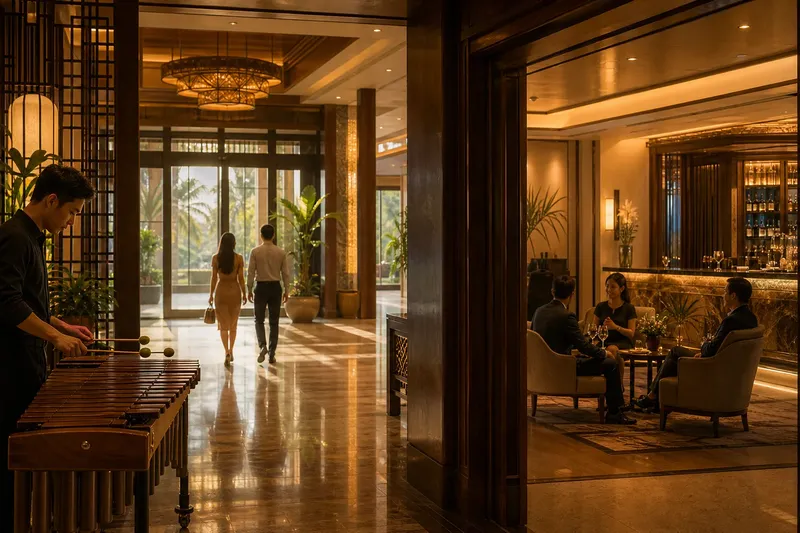
At the entrance to Casino Bình Phước, a brief chime could signal arrival; deeper inside, the same two-note shape might return on a wooden marimba, softened beneath the clink of glasses. These recurring soundmarks can give Casino Bình Phước a recognizable sonic identity without turning every room into the same soundtrack.
Soundmarks, Not Soundtracks
A soundmark is a recurring cue that helps distinguish a place: a short musical figure, a particular bell tone, or a subtle rhythmic pattern. It is less like a song played everywhere and more like a familiar signpost. Guests may recognize it consciously, or simply feel that separate spaces belong to one venue.
That distinction matters in a casino setting. A soundmark can refer to local character without claiming to represent all of Bình Phước or its communities. A cue inspired by a local instrument, for instance, should be chosen with care and context rather than treated as decorative shorthand.
Keep the cue brief and flexible. A musical figure can be played on different instruments, while a nonmusical cue might return as a similar tonal color or rhythm. The aim is recognition, not a constant reminder that guests are inside a designed environment.
Choose A Clear Cue
Start with a cue that remains identifiable when its arrangement changes. A short sequence of notes is easier to adapt than a long melody; a recurring bell-like tone can be easier to place than a busy musical passage.
- Short melodic figure: If it remains recognizable when played on another instrument, adapt it across spaces; if it depends on a full arrangement, shorten it or choose another cue.
- Distinctive timbre: If the tone stands apart from nearby sounds, use it selectively; if it blends into clatter or speech, change its register or select a clearer sound.
- Simple rhythm: If the pattern is easy to follow without drawing attention, retain it; if it feels like a signal demanding action, soften or remove it.
- Local reference: If its source and meaning are understood in context, consider using it; if its meaning is uncertain, consult knowledgeable local voices or choose a neutral sound.
- Room fit: If the cue suits the activity in the room, keep it there; if it distracts from conversation or service, use a quieter variation or leave it out.
- Distinctiveness: If the cue can be confused with an operational alarm, separate it clearly; if guests could mistake it for an instruction, choose a different sound.
Adapt It By Room
Let each area shape the cue. An entry might present a clear, complete phrase. A dining area could use a sparse instrumental echo, while a lounge might rely on the same soft tonal color without repeating the notes. These choices make the soundmark part of a place’s identity, not a blanket soundtrack.
Pay attention to where sounds cross boundaries. A wall, open doorway, or hard floor changes what reaches the next room. If two zones need different characters, a pause or a change in timbre can mark the transition more clearly than simply turning one continuous track up or down.
Silence can also help define a soundmark. When a cue appears only at selected moments, it has room to register; if it runs without a break, it may become background clutter. Staff announcements, service sounds, and guests’ conversations should remain understandable.
A Worked Design Scenario
Imagine a design team planning an invented route from the entrance to a lounge. For planning purposes, it has two rooms, one soundmark, and two arrangements: a clear version at the entrance and a softer version in the lounge. The starting decision is to use a three-note marimba figure as the cue; those quantities describe this scenario, not an actual venue.
The team assigns the clear arrangement to the entrance and the soft arrangement to the lounge. It then walks the route and listens at the doorway, checking whether the lounge version is identifiable without overtaking conversation. If the notes carry too plainly into the lounge, the team removes the lounge arrangement and keeps the cue at the entrance; if the lounge version remains subtle and distinct, it keeps both. The resulting choice is either a single, localized soundmark or a shared cue adapted for both rooms.
How Should Soundmarks Work?
Can a soundmark be nonmusical?
Yes. A recurring chime, a gentle tonal texture, or a distinctive rhythm can connect spaces without a melody. Choose a cue that does not resemble an alarm or compete with service sounds.
Should every room repeat the cue?
No. Some rooms may need quiet or a different atmosphere, and a soundmark can remain recognizable through selective use. Leave it out wherever it distracts from the room’s purpose.
How can a local reference be used respectfully?
Learn the reference’s meaning and context before incorporating it. When that context is unclear, seek informed local advice or choose a sound that makes no claim to represent local culture.
What if guests do not notice it?
That does not make the cue useless; a soundmark can contribute to an overall sense of place without becoming a conscious puzzle. Keep it restrained and useful to the space rather than making recognition the goal.
Review The Soundmark
Listen from the guest’s route, not only from the control desk. Approach each doorway, pause in the room, and consider whether the cue feels intentional, whether nearby speech remains clear, and whether the area still has its own character.
For Casino Bình Phước, soundmarks can offer a modest link between spaces while leaving room for distinct local identities and activities. The useful cue is the one that belongs where it appears—and stays out of the way when the room needs something else.