A Welcome Desk or a Roaming Host?
Compare a welcome desk with a roaming host to see how each makes help visible and gives casino visitors a clearer place to ask for assistance.
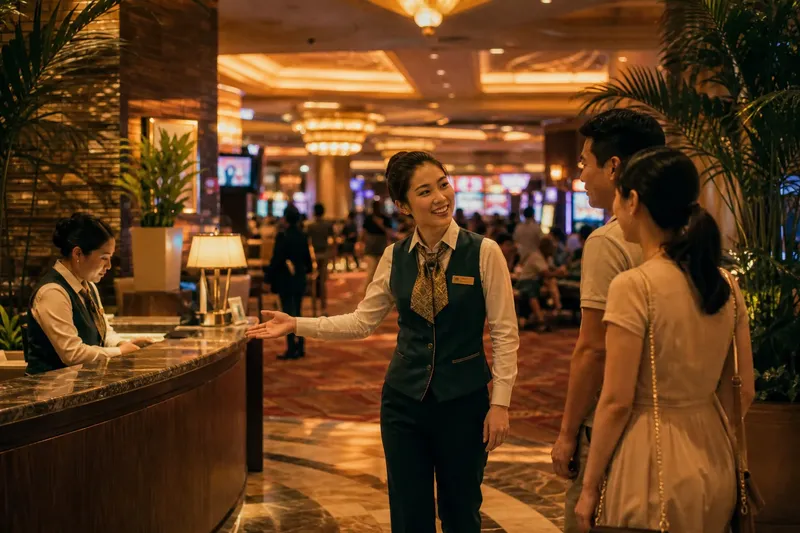
A welcome desk gives visitors one obvious place to ask; a roaming host brings help closer to wherever a question arises. In a Casino Bình Phước setting, that difference can shape a guest’s first impression as much as the greeting itself. One arrangement says, “Come here.” The other says, “I can meet you there.”
Neither is automatically friendlier. The useful choice depends on the room, the guest’s movement and what the service team can reliably provide. These field notes look at how each approach makes help visible, where each can leave a visitor uncertain, and how to combine them without making the service feel scattered.
The Desk as Landmark
A fixed welcome desk works like a familiar table in a busy room: you know where it is, even when you are not using it. A guest can scan the entrance, spot the counter and decide to approach when ready. That predictability matters to visitors who prefer to ask privately, gather their thoughts or avoid interrupting someone who appears occupied.
The desk can also carry a distinct service identity. A clear counter, a staff member facing the entrance and a simple visual cue can mark the point for questions about directions, access or venue services. The visitor does not need to guess whether a passing employee is available for a longer conversation.
But a desk only helps if people can locate it and understand its purpose. A counter tucked beside a queue, hidden behind decorative screens or occupied by staff absorbed in another task may look like a barrier rather than an invitation. A guest can see the desk and still wonder whether it handles the question they have.
Placement shapes the invitation. Near an entrance, a desk can catch arrival questions before a visitor has to choose a route. Near a transition between spaces, it may be more useful for helping guests orient themselves after they have explored. The right position depends on the venue’s actual flow; a desk should be visible from the places where people naturally pause, not merely from a floor plan.
The Host in Motion
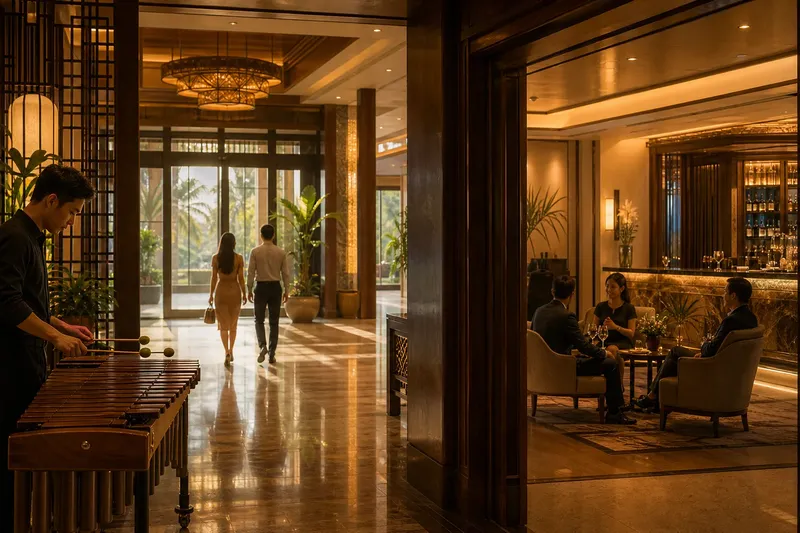
A roaming host offers a different signal: help is not limited to one counter. Staff can be present near a lounge, a performance area or a point where visitors often hesitate. That proximity can make a small question easier to ask. A guest who is already moving may welcome a brief answer without having to retrace their route.
Movement can also soften the formality of service. Rather than directing every visitor toward a counter, a host can offer a greeting, notice a searching glance and invite a question. The visitor retains a choice: accept the offer, ask something quick or continue on.
There is a trade-off. A host who is constantly walking may be hard to find again. A guest may not know whether that person is available, what they can help with or where to look if the conversation needs a follow-up. Staff members who drift between areas without a recognizable role can make help feel less located, not more.
Roaming service works best when it has a legible pattern. That does not mean a rigid route or a visible schedule. It means visitors can recognize the host as a service person and can see that help is present in the area. A name badge, a consistent greeting and attentive posture can communicate availability without requiring a large sign.
Where Questions Start
Visitors rarely arrive with one kind of question. Some need a quick direction. Others need an explanation that takes time or a conversation that should happen away from the main flow. A useful service design gives people a clear first move and a sensible next one.
A desk is suited to questions that benefit from a settled exchange. The guest can pause, point to a map or describe what they are looking for without trying to keep pace with a moving host. A counter may also help a staff member manage several short requests while keeping the interaction anchored in one place.
A roaming host is well suited to orientation in the moment. If a visitor is looking from a corridor toward two possible destinations, an employee nearby can answer before uncertainty turns into a backtrack. The host can also notice when a guest seems to need help, while taking care not to treat a glance or a pause as an invitation to intrude.
For more involved requests, the host needs a clear handoff. They might guide the visitor to the desk, contact the appropriate team or explain where a longer conversation can happen. Without that next step, “I can help” can become a promise the employee cannot fulfill in the spot where they met.
Think of the desk as a home base and the host as a guide who can walk a short stretch with you. The metaphor is useful only if the guest knows where the home base is and the guide can explain what happens next. Otherwise, each arrangement leaves a different kind of question unanswered.
Reading the Room
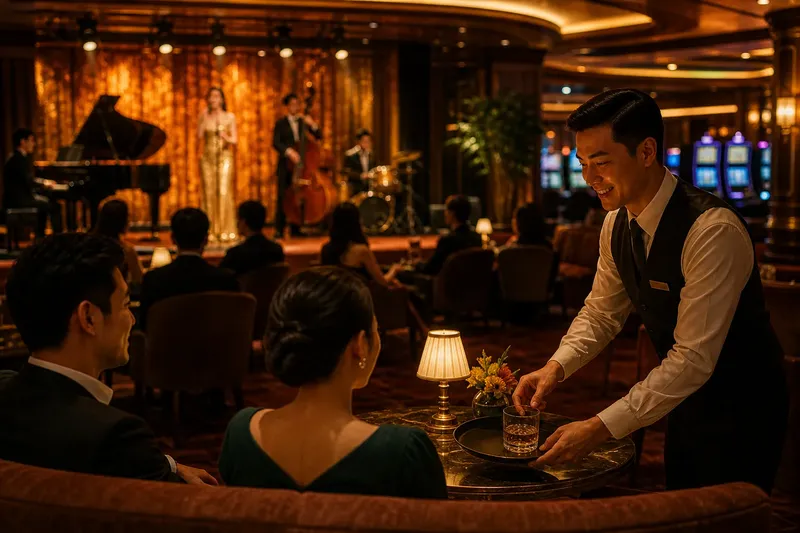
The surrounding sound and activity affect how easy it is to ask for help. Near a lively entertainment area, a visitor may not want to raise a question over the room. A desk placed just beyond the busiest passage can offer a quieter exchange. A roaming host, meanwhile, can approach in a calmer nearby zone rather than forcing the conversation into the loudest part of the venue.
Lighting and sightlines matter, too. A counter should be easy to distinguish from a bar, check-in point or decorative feature. A host should remain visible enough to be recognized, but should not hover so closely that guests feel watched. Service visibility is not simply about making employees conspicuous; it is about making the invitation to ask clear and comfortable.
Pay attention to what a visitor can see while deciding. If the desk is visible only from the entrance, a guest who has moved deeper into the venue may assume it is no longer relevant. If a roaming host is visible but busy with another guest, the next visitor needs some indication of where to wait or whom to approach instead.
In a Casino Bình Phước venue, these details can shape whether service feels like a formal checkpoint or part of the room’s hospitality. The aim is not to make every employee constantly available to everyone. It is to reduce the uncertainty between noticing a need and knowing how to ask.
One Desk, One Host
A hybrid arrangement can give visitors both a reliable destination and help along the way. The desk remains the recognizable anchor. A roaming host covers nearby spaces, answers short questions and directs guests to the desk when a request needs a longer or more private exchange.
For the combination to feel coherent, staff need to describe the relationship plainly. A host might say, “I can point you in the right direction, and the welcome desk can help with the rest.” The wording should match what the staff can actually do. If a host cannot handle a particular matter, a direct handoff is kinder than a vague invitation to keep asking around.
Staff coordination matters more than the number of service points. If the desk does not know where the host is working, or the host sends visitors toward a counter that is closed or occupied, guests are left to reconnect the system themselves. A shared understanding of who is covering which area can keep the public-facing experience simple.
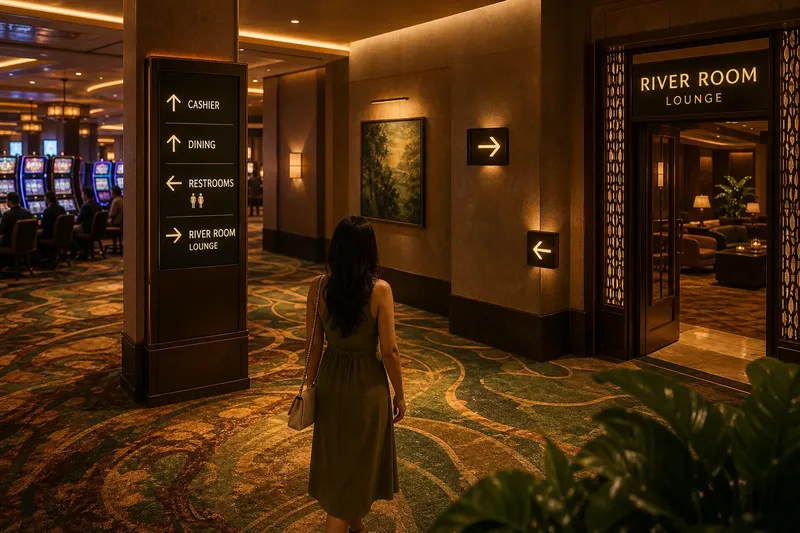
Say a visitor enters a lounge, sees a host near the corridor and asks where to find the welcome desk. The host gives a concise direction and points out a visible landmark along the way. If the visitor then raises a more involved service question, the host explains that the desk is the right place and offers to walk with them when appropriate. The expected observable result is straightforward: the guest knows where to go and does not have to guess whether the first employee can handle the follow-up.
Choosing a Service Point
Before favoring a desk or a roaming host, consider the questions guests actually bring to that part of the venue. A service point should fit the work, not simply look polished in a rendering.
- Check the first sightline. From the entrance and nearby decision points, can a visitor identify where to ask? If not, reposition the desk or make the host’s role easier to recognize.
- Check the expected conversation. Are questions usually brief, or do they need privacy and time? Use roaming help for quick orientation and a settled point for exchanges that benefit from a pause.
- Check the room’s noise and pace. Can a visitor hear and be heard comfortably? Place the desk away from competing sound, or have hosts invite longer conversations to a quieter area.
- Check the handoff. If the first employee cannot resolve a request, is the next person or place clear? Set a simple referral that staff can explain in ordinary language.
- Check the visible invitation. Does the counter look open, and does the host look approachable without hovering? Adjust posture, placement and visual cues before adding more words or signs.
- Check continuity across spaces. Can a visitor who leaves the desk still find help nearby? Keep the anchor recognizable and make roaming coverage visible in the areas it serves.
These checks do not require a single service model for the whole venue. A quiet entrance may benefit from a desk, while a broad lounge may need a host who can meet guests across its spaces. Different areas can use different arrangements, provided visitors can still tell how to ask.
Questions Visitors Ask?
Is a welcome desk easier to find?
Usually, a fixed point is easier to remember because it stays in one place. It still needs a clear sightline and a recognizable purpose, or visitors may mistake it for a check-in counter or another service station.
Can a roaming host answer every question?
Not necessarily. A host can handle directions and simple orientation, then refer a more involved request to the right person or location.
Which option feels less formal?
A roaming host may feel more conversational because help comes into the visitor’s space. A well-positioned desk can feel equally welcoming when staff make eye contact and give guests room to approach at their own pace.
Can a venue use both?
Yes, if the two roles connect clearly. Keep the desk as a dependable anchor and use hosts to extend service into nearby areas, with a direct handoff for requests that need more attention.
A Clear Place to Ask
The choice between a welcome desk and a roaming host is really a choice about how a visitor first encounters assistance. A desk makes help easy to locate. A host makes it easier to reach help without changing direction. Each can serve the visitor well when its limits are clear and its next step is visible.
For a Casino Bình Phước service setting, begin with the moment a guest realizes they have a question. Where are they standing? What can they see? Would they rather approach a counter, or accept a brief offer from someone nearby? Answering those questions gives the team a grounded basis for choosing its service points.
Even a polished welcome depends on a small, practical courtesy: leave the visitor knowing where to go next. That may be a desk they can see, a host who can guide them, or a clear handoff between the two. When that route is legible, asking for help feels like part of the visit rather than a separate task.